Jamnagar, situated in the industrial heart of Gujarat, India, has cemented its reputation over decades as the unequivocal "Brass City of India." Accounting for nearly 80% of the country's brass component manufacturing, this vibrant industrial ecosystem provides a strategic advantage for global B2B buyers sourcing precision brass components.
The Metallurgical Ecosystem of Gujarat
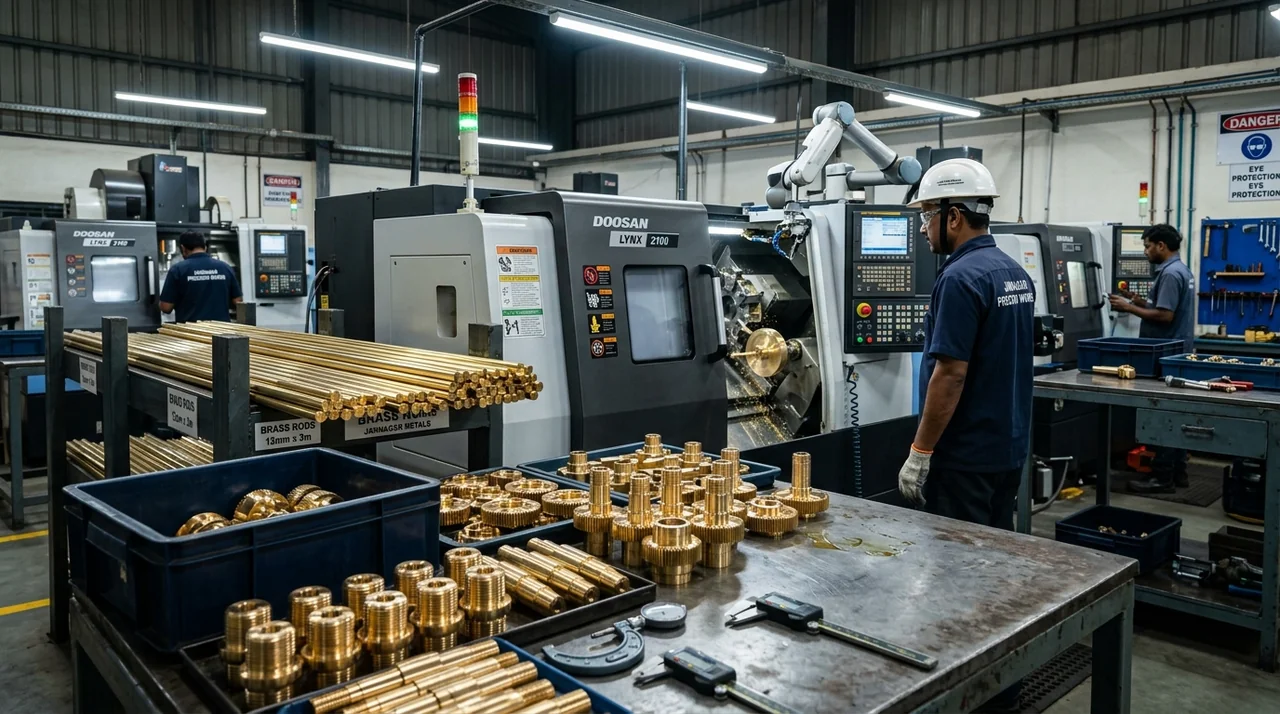
Unlike isolated manufacturing facilities, Jamnagar operates as a complete, self-sustaining industrial web. The city is home to specialized scrap metal recyclers, world-class extrusion mills, and thousands of highly specialized machining workshops. When an OEM requires a massive run of custom brass turned parts, the raw material—often high-purity brass billets—is extruded locally, eliminating supply chain delays and massive inland freight costs.
This localized ecosystem allows manufacturers like Clampex International to maintain strict metallurgical control over raw materials, ensuring that every Jamnagar brass manufacturercan trace their alloys back to certified, high-grade ingots.
Uncompromising Electrical Component Standards
For electrical power grids, substations, and grounding installations, the mechanical integrity of fasteners is non-negotiable. Precision brass electrical componentssuch as heavy-duty split bolt connectors, neutral links, and cable lugsrequire exact threading and flawless conductivity.
In Jamnagar, manufacturers leverage specialized alloys like CW614N and CZ121. These free-machining brass grades contain trace amounts of lead that act as microscopic lubricants during the turning process, resulting in impeccably smooth threads. The result is an OEM brass part from Gujaratthat guarantees zero slippage and maximum torque resistance when securing high-voltage copper wires.
Closed-Loop Recycling and Cost Efficiency
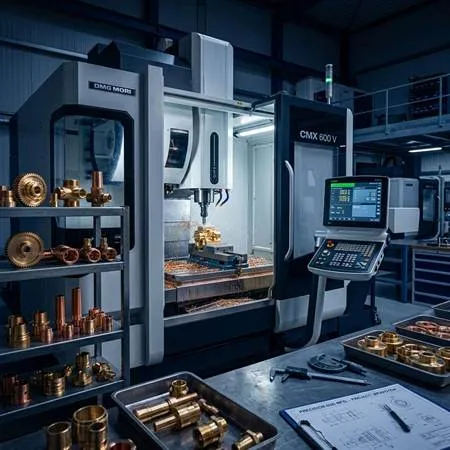
One of the hidden secrets to Jamnagar's global dominance is its closed-loop recycling economy. During the machining of custom CNC turned parts, thousands of tons of brass swarf (chips) are generated. In Jamnagar, this scrap is immediately collected, melted down at local foundries, and extruded back into fresh brass rods. This zero-waste approach drastically reduces material overhead, allowing Indian exporters to offer highly competitive pricing to European and North American EPC contractors without sacrificing a micrometer of quality.