
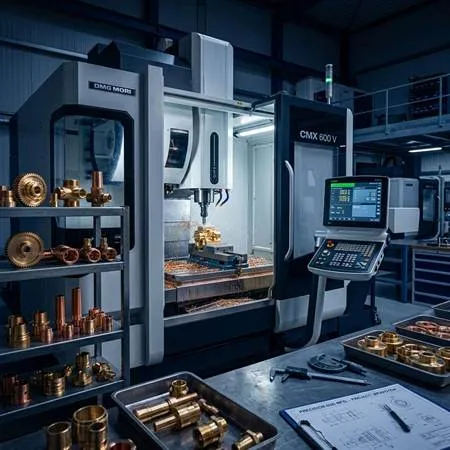
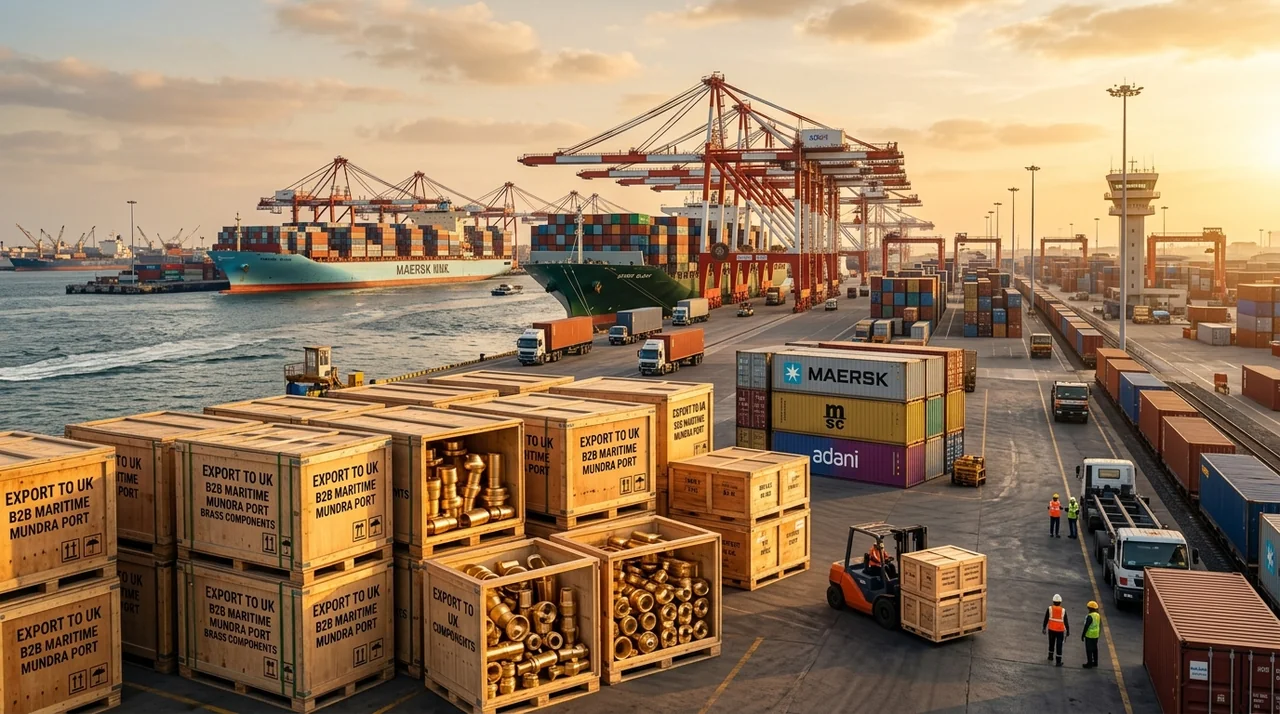
In the realm of electrical jointing and industrial assembly, the phrase "close enough" does not exist. A loose thread or a misaligned screw can lead to catastrophic electrical arcing, overheating, and complete system failure. This is why the production of high-tolerance brass fasteners relies heavily on advanced manufacturing technologies like Swiss CNC machining.
Eliminating Dimensional Drift
Traditional lathes hold the workpiece at one end, which can cause long, slender brass rods to bend or deflect slightly when the cutting tool applies pressure. This deflection causes "dimensional drift" across large production runs. Swiss CNC machining in India eliminates this entirely by utilizing a guide bushing. The brass rod is supported immediately next to the cutting tool, meaning zero deflection occurs, even under heavy turning, threading, or knurling operations.
Complex Multi-Axis Capabilities
As a premier precision brass screws manufacturer, utilizing multi-axis Swiss screw machines allows us to perform turning, milling, cross-drilling, and threading in a single, continuous operation. Because the part does not need to be manually moved to a different machine for secondary operations, the geometric relationship between all features remains absolutely perfect.
The Economic Advantage of Speed and Precision
For high-volume high-tolerance brass fasteners, the speed of Swiss machines is unmatched. By eliminating secondary setups and reducing material waste, the cycle time per part drops significantly. This technological superiority allows manufacturers to produce millions of flawless machine screws, hex bolts, and bespoke knurled inserts with zero defect rates, delivering immense economic value to global EPC contractors.