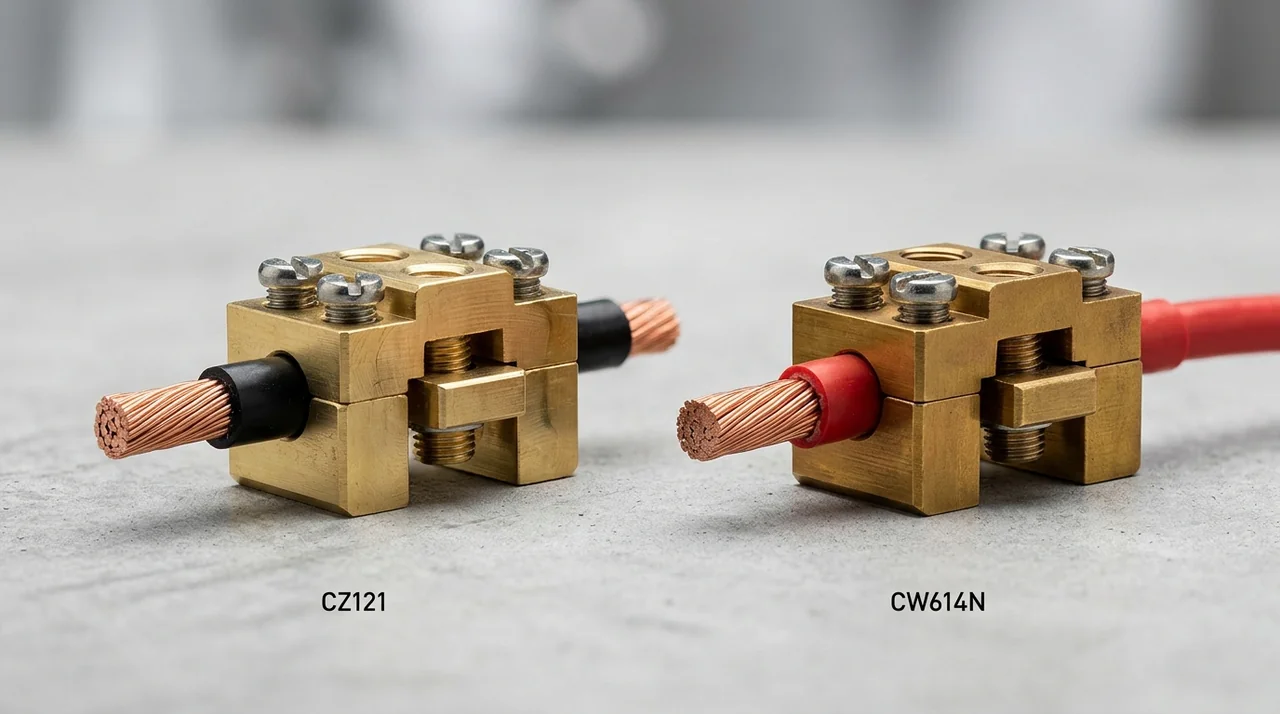
When engineering high-voltage neutral links, earth blocks, and heavy-duty split bolts, selecting the correct base metal is paramount. The debate between CZ121 vs CW614N brassis highly common among procurement engineers, though demystifying their chemical compositions reveals that they are largely functional equivalents designed to maximize machining efficiency and conductivity.
The Chemistry of Free-Machining Brass
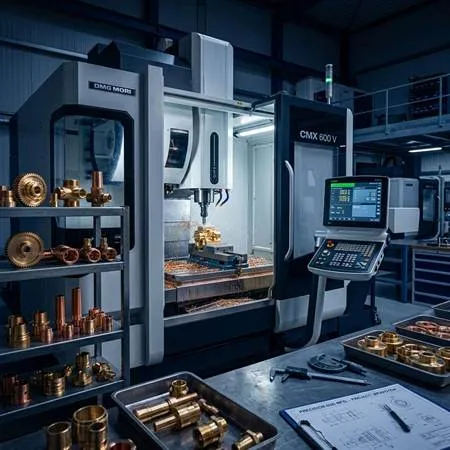
Both CZ121 (under British Standards) and CW614N (under European EN standards) are classified as "free-machining" brass. They contain approximately 58% copper, 39% zinc, and a crucial 3% addition of lead. This specific lead content is what makes them the ultimate electrical terminals material. The lead acts as a microscopic lubricant at the cutting edge of a CNC lathe tool, causing the brass chips to break off cleanly and rapidly rather than forming long, tangled stringers.
Surface Finish and Thread Integrity
Because these alloys machine so cleanly, they yield an incredibly smooth surface finish. This is vital for high-conductivity brass connectors, as any burrs or rough threading can increase electrical resistance and cause dangerous localized heating in a power grid. The flawless threads produced by CZ121 and CW614N ensure maximum surface-area contact between the terminal and the copper wire.
Why They Remain the Industry Standard
While low-lead and lead-free alloys are emerging for potable water plumbing applications, CZ121 and CW614N remain the undisputed champions for heavy electrical and structural engineering. Their unique combination of rapid machinability, excellent hot-forging characteristics, high tensile strength, and superior electrical conductivity make them the optimal choice for cost-effective, high-performance earthing terminals globally.